So you've found a boat for sale. But what should you look for?
So you’ve decided you want to buy an Impala (a wise choice!) But what should you look for? One hundred and fifty-five boats were built in six years by Hunter Boats, and their condition, 30 years on, is generally excellent, despite three decades of racing and cruising.
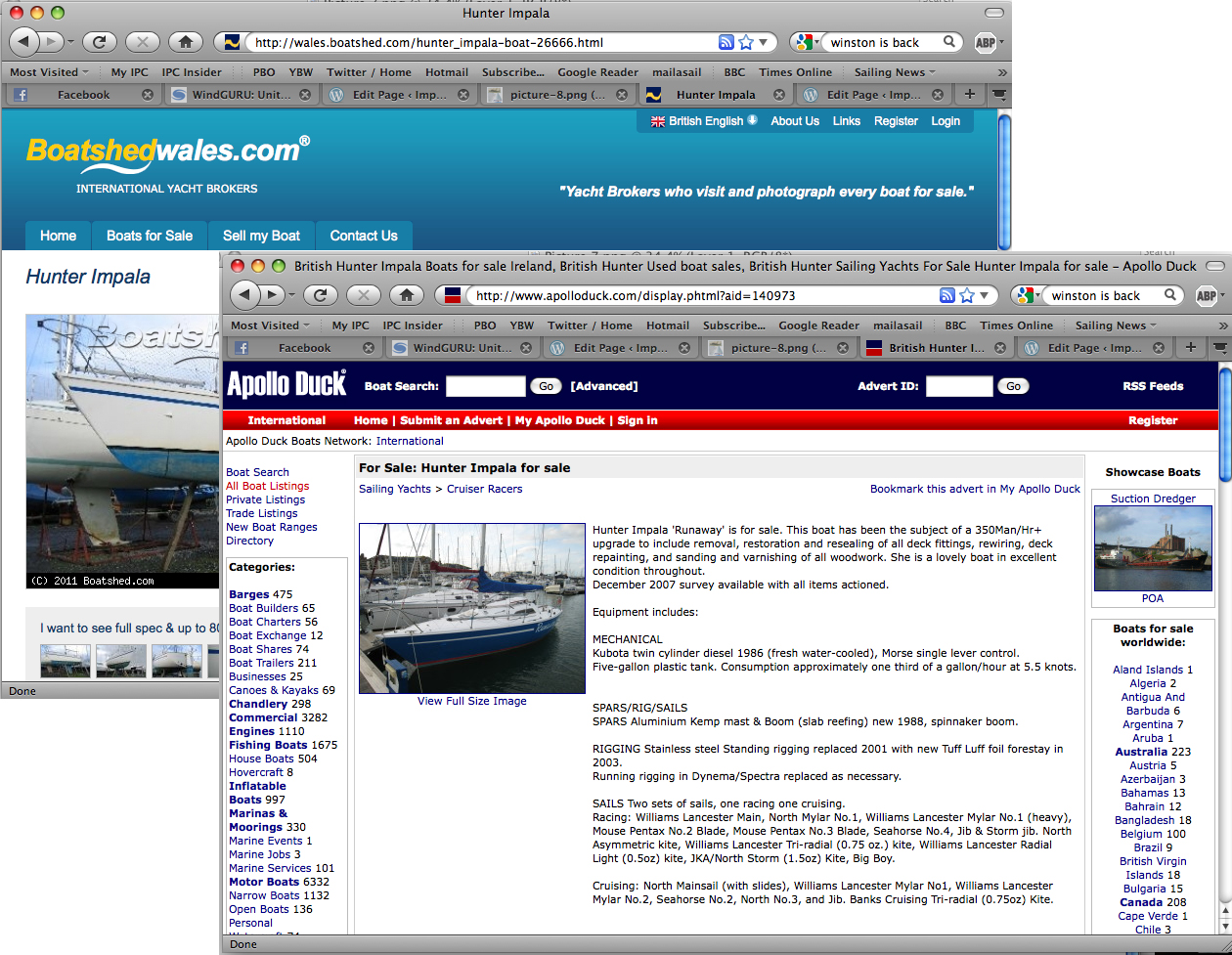
First, where to look? There are some good websites where you may find a boat. First of all, try the For Sale section of this website. No luck there? YBW.com, Apollo Duck, Boatshed.com and boatsandoutboards.co.uk are all good places to look. While impalas don’t tend to change hands very often, when they do, they shift quickly, so keep checking back.
Next, what should you look for? Best of all, find a local Impala owner, and persuade them to let you crawl over their boat and show you what they might have discovered while they’ve owned the boat. Get in touch with the committee, who will be delighted to talk you over what they know.
A Surveyor’s View
South Coast surveyor David ‘Hoppy’ Hopkins has been surveying Impalas ever since they were first launched in 1979. ‘To be honest, they’re just good boats’ he says. ‘They’re well built, easy to repair and nothing major tends to go wrong. In my experience, the keels don’t fall off, the boat’s don’t fall apart – they were built to last!’
One potential area to look at is the chainplates, where water may have entered over the years and softened the plywood bulkhead that they’re bolted to. It’s important this is kept water tight.
Some boats have springy decks, where water may have entered the layup. It’s not a mojor structural problem – and is fairly easily solved. ‘The good thing about the Impala is it’s a simple construction, that can be repaired by anyone’.
Some boats have rusty spots on their keels – but, again, this is a simple job that can be done yourself cheaply.
If the boat has an inboard, -normally a Yanmar 1gm10 – check the exhaust elbow for corrosion. If left unchecked, this can rust through and inject hot salty water into the cylinder head -a an expensive repair.
Check that the mast step hasn’t compressed or sunk under the rigging tension – rare, but worth a quick look.
The original houdini forehatches are prone to leaks – but are easily replaced.
NON CLASS KEELS
Over the years a few Impalas have been fitted with re-designed keels. If you are thinking of selling or buying one of these boats and want to bring it back into class, a class keel can be obtained from Iron Bros in Wadebridge who originally made the keels.
Unfortunately the pattern has been lost (its over 30 years since they last cast an Impala keel !) so there is a pattern charge.
If you want to look into this further, please contact one of the committee .
The quote is as follows (dated June 2012):
Produce approximately 850kg Cast Iron fin section assembled to approximately 45kg 3% antimonial lead shoe, complete with top flange drilled and tapped. All finished in two-pack epoxy primer: £2,580 + VAT Delivered UK
Pattern for the above: £2,050 + VAT
Delivery: 6 / 8 weeks from our receipt of your order with payment due prior to dispatch after optional inspection in our works.
The pattern cost is a one off charge. If multiple owners decided to order keels, this could be amortised between them.
Please do not hesitate to contact me if you have any queries.
Kind regards,
NIGEL BURT
Director
IRONS BROTHERS LIMITED
The Foundry, St. Breock, Wadebridge, Cornwall PL27 7JP, UK
Tel: +44 (0)1208 812 635
0 Comments